Our R&D department blends science with engineering to objectively measure, understand and reduce environmental impacts.
It draws on practical projects, developed in collaboration with academic research centres, to produce reliable data, reproducible methods and practical solutions.
Our work focuses in particular on terrestrial and marine biodiversity, resource circularity, decarbonisation and environmental instrumentation.
Our R&D strategy in few words
Why develop R&D within an engineering consultancy?
Because technical and environmental decisions must be based on proven facts. Our R&D approach aims to enhance the quality, reliability and transparency of environmental studies by drawing on:
- field experiments,
- proven scientific protocols
- research reviewed and shared with the scientific community
The aim is clear: to accelerate the environmental and energy transitions by providing public and private decision-makers with measurable, actionable results in the field.
a structured R&D programme with links to the academic world
Our innovation strategy is based on close links with the academic and public research sectors.
We develop our R&D projects in collaboration with universities, research organisations and recognised laboratories, in order to combine scientific expertise with operational know-how.
These collaborations allow us:
- to consolidate the scientific foundations of our methods,
- to contribute to the production of new knowledge,
- and to evolve environmental engineering practices.
Our partnerships with the academic world:
- Université de Tour – INSA Centre Val de Loire: CITERES
- MNHN: Centre for Ecology and Conservation Sciences (CESCO)
- CNRS: Roscoff Biological Station: Unit Adaptation and Diversity in the Marine Environment
- École des Mines de Saint-Étienne: Unit Environment, Town, Society
- National Institute of Applied Sciences of Lyon Waste, Water, Environment and Pollution Laboratory
Our work results in publications, scientific communications and technical valorisations, in collaboration with our partners.
Our latest publications:
Our latest oral presentations and scientific posters:
We are also involved in supervising Master’s and final-year placements, helping to train new professionals at the interface between research, engineering and public policy-making.
The interns and their topics:
- Hugo Vieilly (2023-2024) – 5-th year at INSA Lyon
- Jolan Soyer (2024-2025) – Master 2 Biodiversity, Ecology, Evolution – Environmental Genomics «Highlighting the impact of grain size on the structure of soft-bottom benthic communities using DNA metabarcoding.«
- Clara Curinier-Delorme (2026) – Placement 3-th UTC year – Roscoff Biological Station «Development of molecular tools for monitoring meroplankton to understand ecological dynamics in an offshore wind farm context«
Environmental data is a key lever for innovation.
We place its quality, traceability and value at the heart of our R&D approach, particularly through the development of standards and tools that promote FAIR data: Findable, Accessible, Interoperable, Reusable.
Through key projects carried out in collaboration with, amongst others, the National Museum of Natural History, we are developing infrastructure and methods that enable:
- the open availability of data and workflows,
- the reproducibility of the analyses,
- improving the comparability and reliability of environmental assessments.
At regional level: FRATRI / TERRE HAUTS
Internationally: Horizon Europe: REGENSOILL (2025-2030)
our main research and innovation priorities
Biodiversity, resilience and environmental adaptation
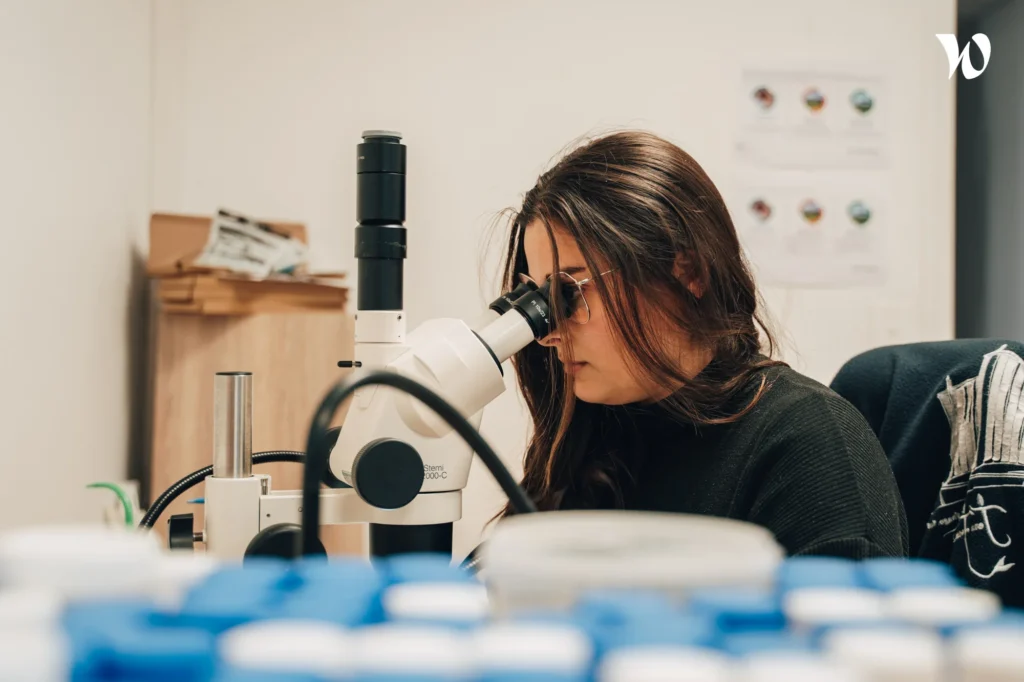
In the face of increasing human-induced pressures, understanding how living systems function is becoming a prerequisite for any planning decision. Our research aims to objectively assess the state of ecosystems, to analyse how they respond to disturbances, and to identify the mechanisms that promote their resilience.
By combining field observations, molecular tools, quantitative approaches and long-term academic partnerships , we are developing rigorous methods to inform decision-makers’ choices and design nature-based solutions tailored to marine and terrestrial contexts.
what we are trying to do
- Characterise biodiversity and how it responds to human pressures .
- Measure the resilience species and ecosystems.
- Identify credible adaptation strategies for project owners.
- Offer nature-based solutions to support adaptation that promotes biodiversity
a few iconic projects
- Benthic DNA off Oléron (AO7) Development of metabarcoding tools for the monitoring of marine habitats
- Zooplankton eDNA – Dieppe – Le Tréport extension of eDNA approaches to pelagic communities
Circular economy, decarbonisation and resource recovery
The transition to a low-carbon economy requires a fundamental shift in the way we produce, consume and manage materials. Our research focuses on quantifying the environmental benefits of these transformations, overcoming the scientific and technical barriers associated with material flows, and exploring new sources of resources.
At the crossroads of engineering, environmental sciences and social sciences, we develop practical approaches to support public and private sector stakeholders in moving towards more resource-efficient, circular and resilient models.
what we are trying to demonstrate
- Quantify the environmental benefits (don't carbon) new modes of production/consumption.
- Remove obstacles on 5 R (refuse, reduce, reuse, recycle, rot).
- Reinventing material flows, including critical raw materials (rare earths / dispersed minerals), for autonomy and sustainability.
a few iconic projects
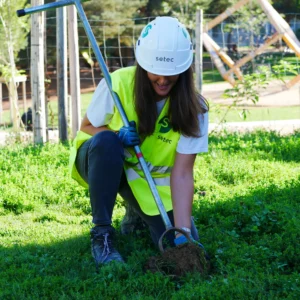
- Terres & Sols Fertiles (TSF) design of Technosols using excavated soil, organic matter and deconstruction materials to meet market garden production needs.
- RECORD Study (bio-waste overview, sectors, carbon footprints): updated analysis corpus (deposits, treatment pathways, impacts).
Environmental Dynamics: Instruments & Data Processing
Improving the quality of environmental assessments relies on our ability to better measure, analyse and make the most of data gathered in the field.
This research theme explores the development and integration of innovative, non-destructive, high-resolution instruments, as well as advanced data processing and analysis methods.
By harnessing imagery, remote sensing, automation and artificial intelligence, we aim to produce more reliable, traceable and comparable information to support environmental monitoring and impact assessment.
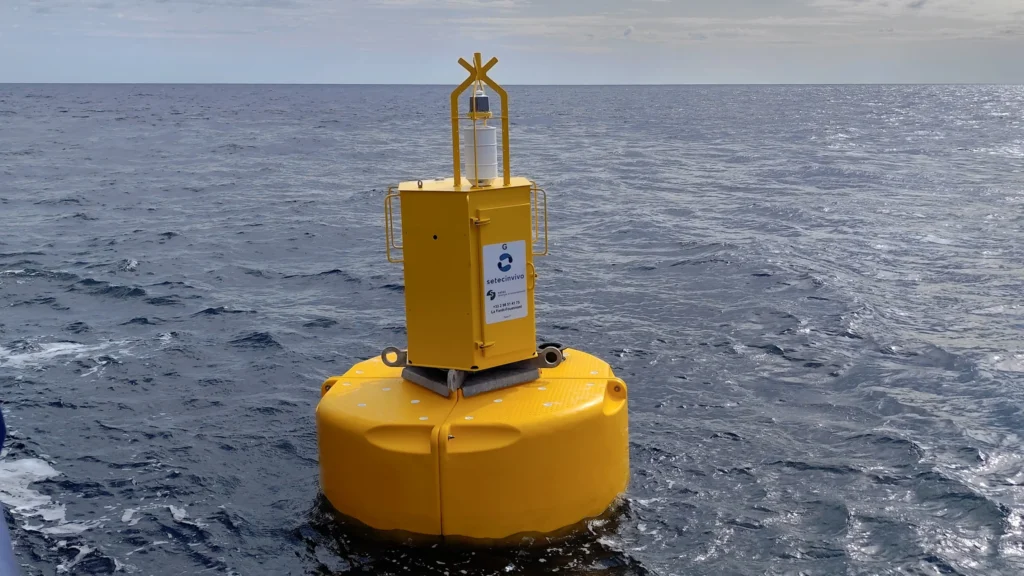
what we are trying to demonstrate
- Test/deploy dice non-financial instruments‑destructive in our monitoring routines.
- To safeguard and value the environmental data (quality, interoperability, data papers).
- Automate l’analyse to gain in precision and in traceability diagnostics
Carbon conversion & greenhouse gas sequestration
The reduction of greenhouse gas emissions cannot be limited to declarative approaches: it requires solid scientific foundations and technically proven solutions.
Our work focuses on the identification of emission sources, the development and evaluation of carbon capture and utilisation technologies, and the recognition of natural sequestration processes.
By combining applied research, project engineering and scientific partnerships, we help to structure credible and measurable decarbonisation pathways.
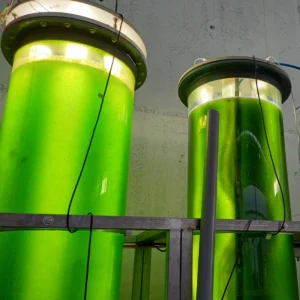
what we are trying to demonstrate
- Identifier the greenhouse gas sources and the tax deductions at source.
- Support the capture and recovery (technologies and market sectors).
- To label dice natural carbon sequestration processes credible (e.g. seagrass beds of posidonia).
a few iconic projects
- COMÉTHA (Syctom/SIAAP) from R&D work to the construction of drivers (Phase 1)
- BioPlastOuen (Syctom) synergies bio‑processes / materials around carbon (capturing, valorizing and co-benefits)