Client
Record
CALENDAR
2023 – 2024
LOCALISATION
France
Context
The valorization of waste constitutes today a major lever for reducing the environmental impacts associated with the management of end-of-life materials and for promoting the relocation of local metabolisms.
However, the diversification of value-adding processes and outlets generates increasing competition for use between different processing methods, which could undermine the long-term availability of certain strategic deposits.
In this context, the association RECORD has commissioned a study aimed at better understanding these competitive dynamics and guiding waste-resource management choices based on their environmental, economic, and societal benefits at the territorial level.
DETAILED MISSIONS
In collaboration with the’School of Mines of Saint-Étienne, setec énergie environnement contributes to an analytical and prospective study aimed at characterizing and objectifying the competitive use of waste resources:
- Identification and typology of the different forms of competitive practices, as well as the factors that favor their emergence in various waste-resource deposits;
- Analysis of the environmental, economic and societal impacts of these competitions, according to the scenarios ADEME Transition(s) 2050;
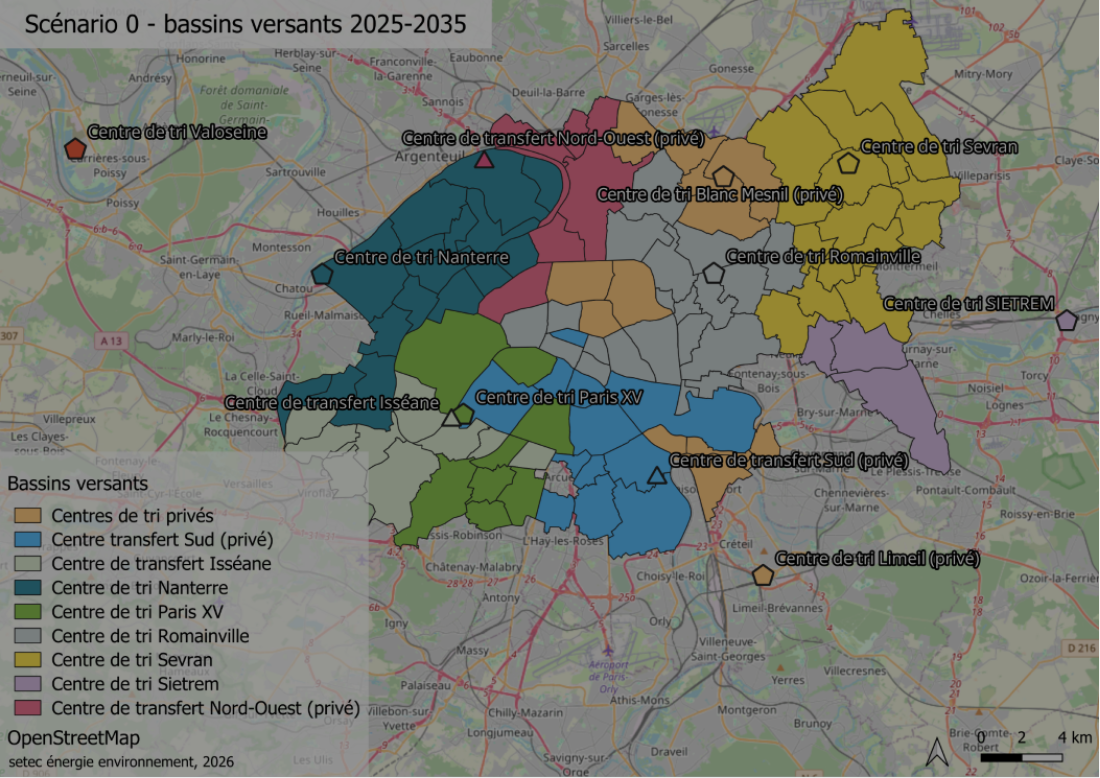
- Evaluation of the allocation dynamics of deposits based on competing uses and territorial priorities;
- Development of operational recommendations and decision-support criteria to guide waste-resources towards the most relevant management and use pathways;
- Contribution to the development of analytical frameworks that allow these issues to be integrated into territorial waste-resource management strategies.