Client
DECLYC: LOT 8 CCUS
CALENDAR
2025 – 2026
LOCALISATION
Chemistry Valley, FRANCE
Context
The DECLYC project (Decarbonizing Lyon – Valley of the Chemistry) is part of the Bas Carbone Industrial Zone (ZIBAC) call for projects of the’ADEME, intended to accompany industrial zones towards a rapid and structural reduction of their emissions.
Driven by the competitiveness pole Axelera, and coordinated with Lyon Valley of Chemistry, The project brings together the industry players in the region around a common goal: reducing CO₂ emissions by 40 % by 2030 and 80 % by 2050 (scopes 1 and 2).
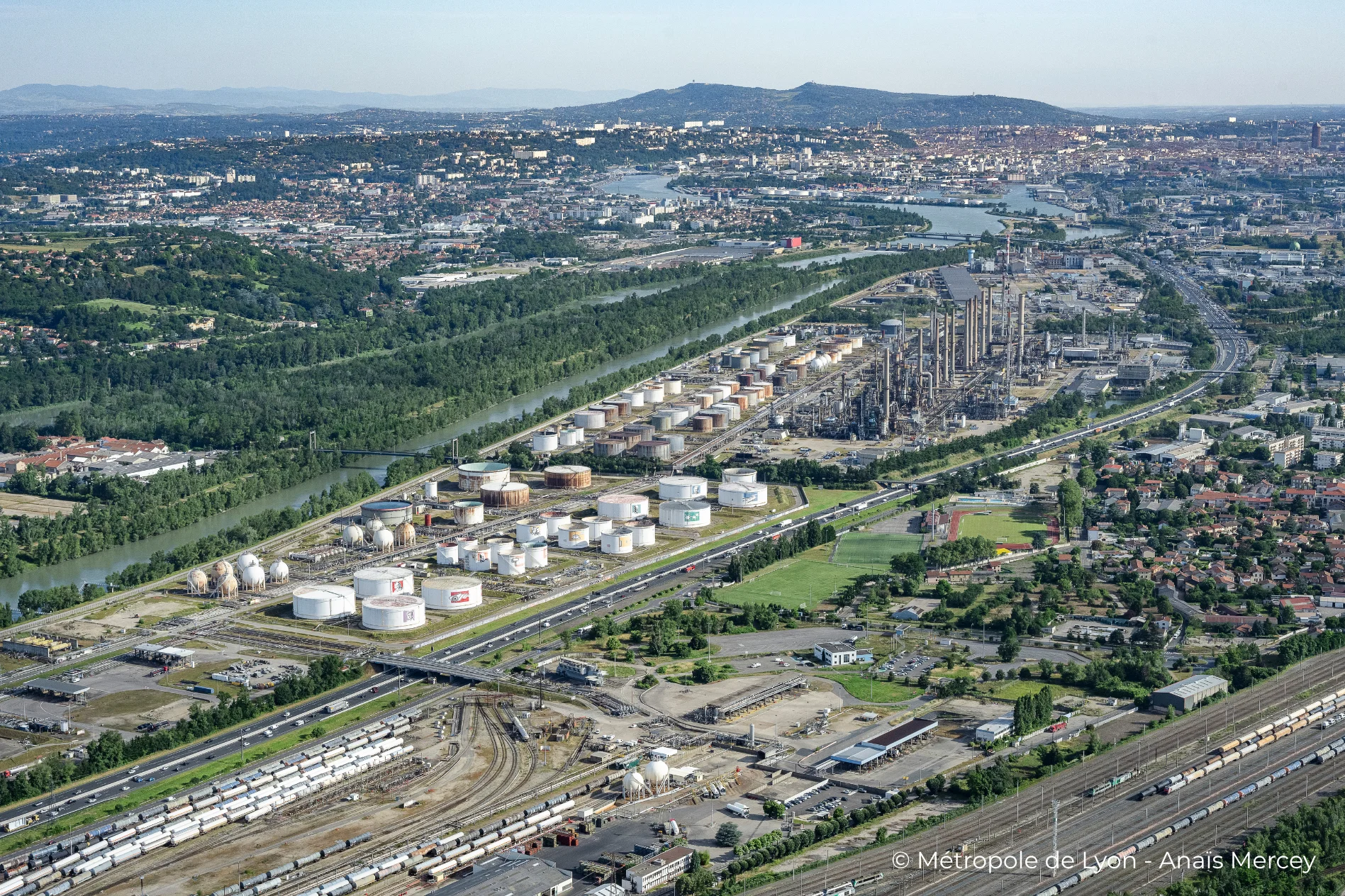
The Valley of Chemistry represents a strategic pole for the chemical, energy and environmental sectors and generates 25% % of the emissions from the chemical sector. Metropole of Lyon.
Within this framework, Lot 8 dedicated to CCUS (Capture, Use and Storage of CO₂) aims to structure a regional roadmap consistent with the national strategy, by evaluating the potential for capturing, using and distributing CO₂ within the territory.
DETAILED MISSIONS
As a Master of Works Assistant (AMO) and technical and environmental expert, setec energie environnement works with its subcontractor Eureteq within a group led by Sia Partners to support the competitiveness poles, industrial members and ADEME on the following missions:
- Assessment of CO₂ flows: overview of industrial emissions and consumption of CO₂ in the region;
- Study of opportunities for transforming and valorizing CO₂;
- Development of CO₂ flow and usage management scenarios;
- Study of CO₂ transport infrastructure (networks, barges, rail freight);
- Analysis of the electrical needs associated with the capture and use of CO₂;
- Life cycle analysis (LCA) and carbon footprint of CCUS scenarios;
- Development of an economic model to compare the scenarios and estimate the capital expenditures (CAPEX) to be incurred.